

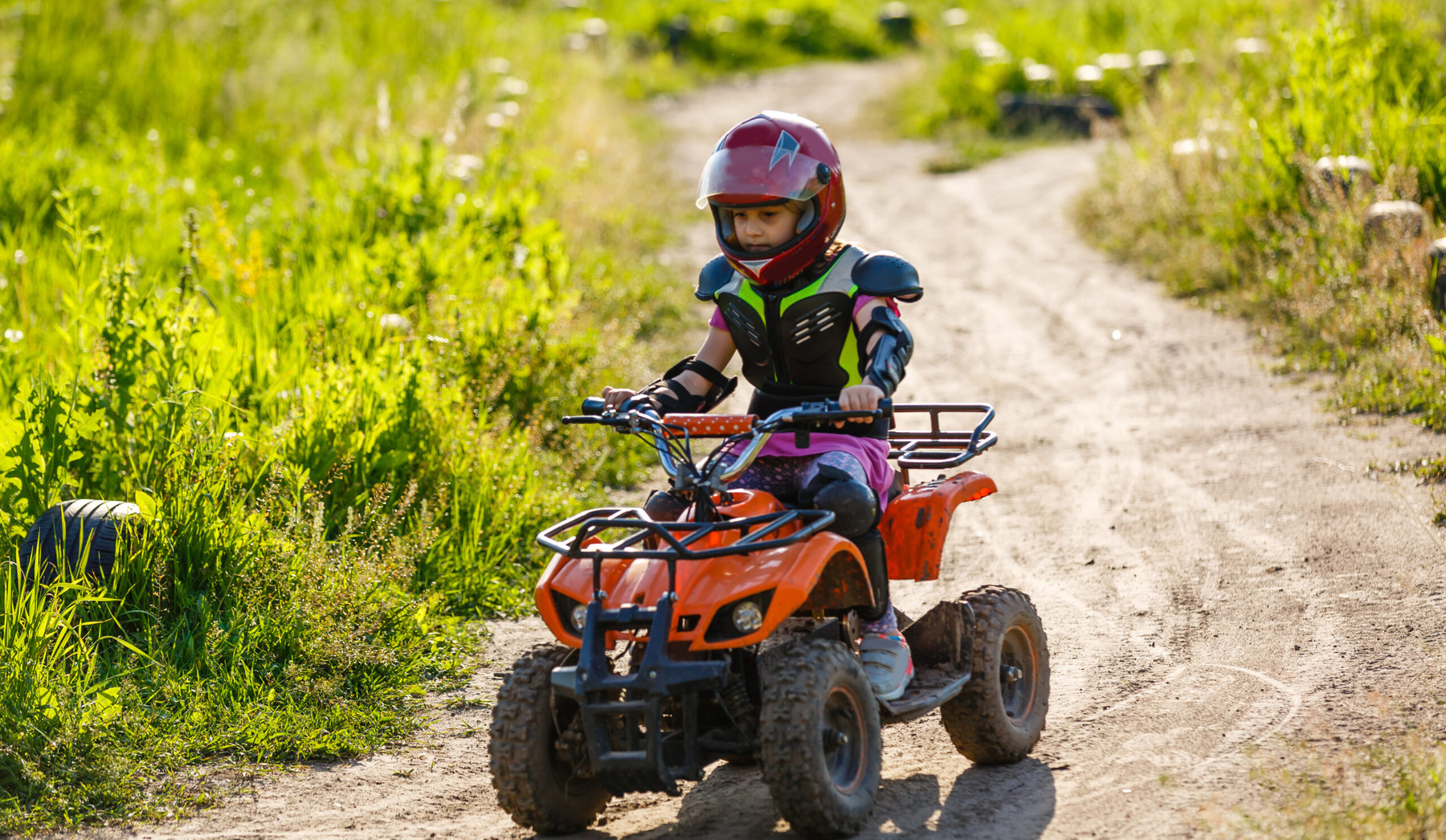
For many families, children’s scooters seem like a fun way for kids to spend time actively outdoors. However, it is also a vehicle, so it’s important to consider not only “likes and dislikes” but also safety, the child’s abilities, and technical specifications. In this article, you’ll find a clear guide to help you understand the different types, key criteria, and common mistakes, so you can make an informed choice when selecting a children’s quad bike.
What are children's ATVs, and who are they intended for?
A children's quad bike is a lower-powered quad bike designed for children, intended for recreation, learning to operate a vehicle, and riding in safe, designated areas. It is most often chosen for:
• riding on private property (in a yard or at a farmstead),
• for light off-road trails (if the terrain and safety conditions permit),
• as an outdoor activity instead of passive leisure.
Most importantly—view it as a tool for the child to learn responsibility and control, rather than as a “toy with no rules.”
Types: electric and gasoline-powered children's ATVs
When making a choice, the main consideration is usually whether to go with an electric or a gas-powered children's ATV. Both types can be suitable, but they differ in terms of operation, maintenance, and feel.
Electric kids' scooters: Who are they for?
Electric four-wheelers for children are often chosen for beginners and younger children because they are easier to handle and their speed is generally easier to control.
Pros:
• Quieter (less noise for neighbors and children),
• Easier maintenance (fewer moving engine parts),
• Easier to “plug and play” for everyday use.
Cons:
• Limited driving time (depends on the battery),
• Charging must be planned,
• Performance may decrease in cold weather or when driving with a consistently heavy load.
Gas-powered children's ATVs: Who are they suitable for?
Gasoline-powered models are more often chosen for older children or for those who will be riding for longer periods, more intensively, or on more challenging terrain.
Pros:
• longer driving time (you can keep going after refueling),
• often a better sense of "acceleration,"
• suitable for longer drives.
Cons:
• Noisier,
• Requires more maintenance (fuel, lubricants, filters, starting system),
• Odor and exhaust fumes – not everyone finds them acceptable.
How to choose based on your child's age, height, and weight
Although age is a convenient guideline, in reality the most important factors are the child’s height, weight, and coordination. When choosing a bike, it’s worth:
• checking whether the child can comfortably reach the handlebars and brakes,
• ensuring that their seating position is stable (feet firmly resting on the footrests),
• whether the child understands and follows the rules (stops when asked).
It is usually recommended to start with a lower-powered and slower model, and as skills improve, move on to a more powerful one. This makes choosing a children’s quad bike safer and more economical (less risk of “outgrowing” it quickly, but more importantly—less risk of overestimating their abilities).
The most important technical criteria to check
Power and speed limiter
One of the most important features is the speed limiter. This allows parents to start at a slower speed and gradually increase it as the child gains control. Even if the four-wheeler seems “small,” excessive speed for a beginner is a common cause of accidents.
For electric vehicles: battery capacity and charging time
Consider not only "how far it goes," but also:
• how long it takes to charge,
• whether the battery is easily accessible (for convenient maintenance),
• whether there is an indicator (remaining power display).
Practical tip: if your child will be riding often, it’s more convenient when the charging process is simple and the storage area is free from moisture and cold.
For gasoline engines: engine displacement (for reference only)
For gasoline-powered models, the engine displacement (e.g., cm³) is often listed—this can help you understand the class, but this number alone doesn’t tell the whole story. What’s more important is whether there’s a speed limiter, how smoothly the power is transmitted, and whether the four-wheeler is suitable for a specific child.
Wheel size, suspension, brakes, drivetrain
• Wheel size: Larger wheels often handle uneven surfaces more easily, but it’s important to balance this with the child’s height.
• Suspension: comfort and stability on uneven surfaces.
• Brakes: should be predictable and easy to control.
• Gears: reverse gear is useful, especially when learning to maneuver in tight spaces.
Safety: What You Need to Do Before Your First Ride
Safety is not just an "afterthought" here. Safety measures and rules should be an integral part of the purchasing process, not something considered only after the fact.
Essential safety measures
• Helmet (proper size, securely fastened).
• Gloves (for better grip and protection).
• Elbow/knee pads; chest protector if necessary.
• Closed-toe shoes, long pants.
Adult Care and Training
• First rides – only with an adult present.
• Teach them: slow starts, braking, turning, and stopping on command.
• Agree on clear rules: where they can and cannot ride, and when to stop.
Where to go
Most often, the safest options are:
• a private, fenced-in area,
• a flat, clearly visible area free of cars,
• free of pedestrian traffic, steep slopes, and obstacles.
Maintenance and Operating Instructions
To ensure your four-wheeler lasts longer and remains safe, it’s worth following a few routines:
• Charging (for electric models): Charge in a dry place; do not use damaged cables; do not allow the battery to remain fully discharged for long periods.
• Storage: Avoid moisture and extreme temperature fluctuations.
• Chain/lubrication (if applicable): Check tension periodically and lubricate as needed.
• Tires: Check the pressure, as tires that are too soft or too hard reduce stability.
• Cleaning: After riding in mud—clean, dry, and inspect for loose parts.
Common Mistakes When Shopping and How to Avoid Them
1. A model that’s too powerful “for the future” – the child may not be ready yet, and the risk increases.
2. Ignoring the speed limiter – this is one of the most important safety features.
3. Purchased based on age, not height/weight – poor ergonomics = poorer control.
4. Operational costs not factored in – battery replacement, charging convenience, gasoline maintenance.
5. Saving on safety gear – a helmet and protective gear must come with the ATV, not “later.”
6. Riding environment not considered – an ATV for children must have a safe environment; otherwise, even the best model won’t help.
Conclusion: What should we do next?
Children's scooters can be a great outdoor activity if the choice is based on the child's abilities and safety. What to do now: make a list of requirements (age/height/weight, where they’ll ride, how often), set a budget not just for the quad bike but also for protective gear, and choose a model with a speed limiter. Then, a quad bike for children will be not only fun but also a manageable and responsible choice.